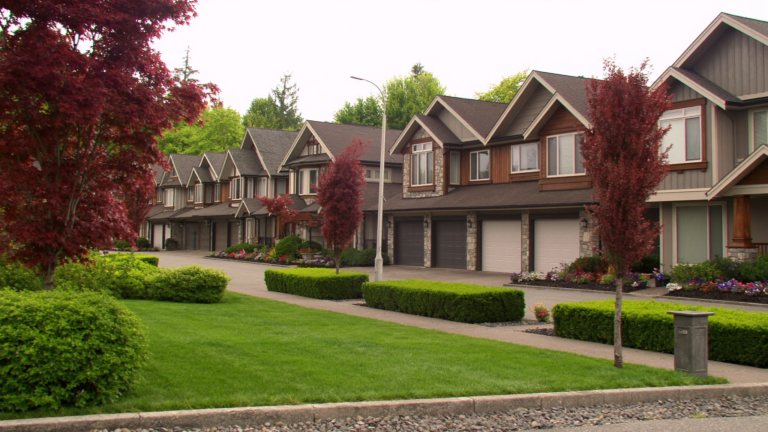
In 2026, Langley home prices keep going up. But you can still make your yard look great without spending too much money. A 2025 survey found that 47% of Canadians think landscaping is one of the best ways to improve their home.
Good news! You can fix up your yard for less money than you think.
This 2026 guide shows you the cheapest ways to make your Langley yard beautiful. You’ll learn which materials cost the least, what jobs you can do yourself, and which choices save money for years to come.
What is the Cheapest Way to Fix Up Your Yard in Langley?
The cheapest ways to fix up your yard mix low-cost stuff with smart help from experts. Start with wood chips or mulch ($30-50 per bag). They stop weeds and keep water in the soil. Plants that come back every year like Oregon grape and salal cost $8-15 each. They grow back on their own.
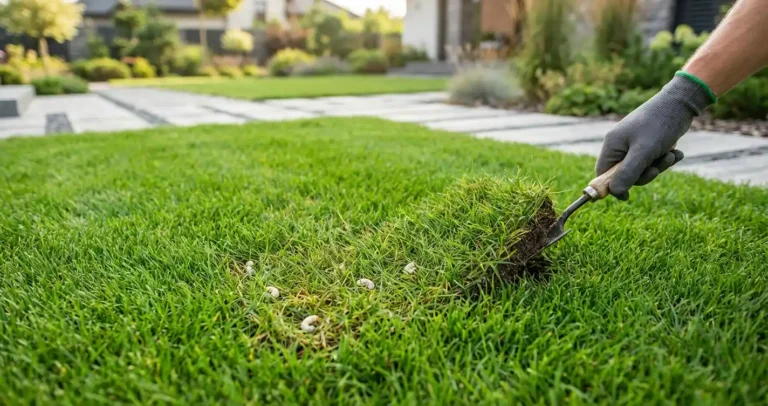
For big grass areas, planting grass seeds saves 60-70% compared to buying rolls of grass. Making paths with gravel ($40-60 per ton) costs way less than fancy stone pavers.
The smartest money trick? Pay a designer for 2 hours ($150-250) to make a plan. Then do easy jobs yourself. Let pros handle the hard stuff like drainage and sprinklers. This saves money and stops big mistakes. Splendid Landscaping Services has helped over 40 Langley families turn $3,000 into yards that look like they cost $8,000+.
Ready to discuss your budget landscaping project? Get a free quote for pro landscaping services in Langley.
Lowest-Cost Landscaping Materials (Under $100 per Project)
When you’re working with a tight budget, choosing the right materials makes all the difference. These options deliver pro results without the pro price tag.
Mulch and Wood Chips: Cheapest Ground Cover
Mulch is the workhorse of budget landscaping ideas. At $30-50 per cubic yard in Langley, one yard covers about 100 square feet at 3 inches deep. It suppresses weeds, retains soil moisture during dry Fraser Valley summers, and breaks down into valuable organic matter over time.
Local Langley suppliers like Art’s Nursery and Countryside Garden Center offer bulk pricing that beats big-box stores. For the best value, buy in late spring when delivery fees get split across neighborhood orders.
Gravel: Lasts Long and Drains Water
Gravel transforms muddy pathways into clean, all-weather routes for $40-60 per ton. Pea gravel works beautifully for walkways, while river rock adds texture to garden beds. Both handle Langley’s wet winters better than organic materials.
One ton covers roughly 100 square feet at 2 inches deep. Buy from bulk landscape suppliers in the Langley-Aldergrove area rather than bagged products—you’ll save 60% or more.
Landscape Fabric versus Cardboard for Weed Control
Skip the $50-80 rolls of landscape fabric. Flattened cardboard boxes work just as well for the first 1-2 seasons and cost nothing. Wet the cardboard, overlap edges by 6 inches, and top with 3 inches of mulch. By the time it breaks down, your plants will shade out most weeds naturally.
For permanent ways, spend the money on commercial-grade fabric only in high-traffic areas or under rock features where you never want plants to emerge.
DIY Edging with Recycled Materials
Clean garden bed edges don’t require expensive metal or plastic edging. Reclaimed bricks, river stones from your property, or salvaged lumber create crisp borders for free. Stack bricks on edge for a classic look, or partially bury larger rocks for a natural aesthetic that suits Langley’s West Coast style.
When You Don’t Need Topsoil
Langley’s heavy clay soil frustrates many homeowners, but trucking in topsoil costs $40-60 per yard. Instead, amend existing soil with compost. Mix 2-3 inches into the top 6 inches of clay. Metro Vancouver offers free compost at some municipal yards, or buy in bulk for $25-35 per yard.
This approach costs half as much and improves drainage better than layering topsoil over clay, which often creates a water-holding barrier that kills plants.
Best Cheap Plants for Langley Yards’s Climate
Smart plant choices grow your landscaping budget. According to Natural Resources Canada, Langley sits in plant hardiness zone 8b1, which means mild, wet winters and warm, dry summers. Work with this climate, not against it.
Plants that come back versus Flowers you buy each year: The Math That Matters
Flowers you buy each year cost $3-5 per plant and die after one season. A typical flower bed needs 20-30 plants, totaling $60-150 yearly. Plants that come back cost $8-15 each but return for 5-10+ years. After year two, plants that come back win on both cost and labor.
Best Native Plants Under $15 Each
Native plants evolved in the Fraser Valley, so they handle local conditions without fuss. These are the most cheap ground cover and shrub options:
• Salal ($8-12): Evergreen ground cover that thrives in shade, needs zero summer water after year one
• Oregon grape ($10-15): Spring flowers, edible berries, handles clay soil and drought
• Sword fern ($8-10): Classic PNW look, perfect for wet, shaded areas
• Red-twig dogwood ($12-15): Winter color, fast-growing privacy screen, loves moisture
Buy these at specialty nurseries like Fraser Valley Rose Farm or the UBC Botanical Garden plant sales rather than big-box stores. Quality is better and staff can answer Langley-specific growing questions.
Affordable Evergreen Shrubs for Year-Round Structure
Small starts of juniper or boxwood cost $10-18 and reach full size in 3-4 years. They provide structure when plants that come back die back in winter. Space them properly from the start—overcrowding leads to expensive removal later.
Ground Covers That Outperform Grass
Grass looks nice but costs $300-600 yearly in mowing, edging, fertilizing, and watering. These ground covers cost less upfront and almost nothing to take care of:
• Creeping thyme ($4-6 per plant): Fragrant, drought-tolerant, handles light foot traffic
• White clover ($15-25 per 1,000 sq ft from seed): Stays green without fertilizer, fixes nitrogen, needs mowing just 2-3 times per season
• Vinca minor ($3-5 per plant): Glossy evergreen leaves, purple spring flowers, thrives in shade
Where to Buy: Big-Box versus Specialty Nurseries
Big-box stores offer convenience and volume pricing on common varieties. Specialty nurseries cost 15-25% more but provide zone-appropriate plants, accurate growing advice, and plants already adapted to Fraser Valley conditions. For cheap landscaping materials Langley homeowners can trust, the extra cost prevents expensive plant replacement.
Plant Comparison: Cost and Care Requirements
| Plant Name | Cost | Light Needs | Moisture | Maintenance |
| Salal | $8-12 | Shade-Part Sun | Dry-Moist | Very Low |
| Oregon Grape | $10-15 | Part Sun-Sun | Dry-Moist | Very Low |
| Sword Fern | $8-10 | Shade-Part Sun | Moist-Wet | Very Low |
| Red-twig Dogwood | $12-15 | Sun-Part Sun | Moist-Wet | Low |
| Creeping Thyme | $4-6 | Full Sun | Dry | Very Low |
| White Clover | $15-25/1000 sq ft | Sun-Part Shade | Moist | Very Low |
What to Do Yourself vs What to Hire
The biggest mistake in landscaping on a budget is either doing everything yourself and creating expensive problems, or hiring pros for tasks you could easily handle. Here’s how to split the difference.
What Homeowners Can DIY Safely
These tasks require no specialized equipment and carry little risk of costly mistakes:
• Planting plants that come back, shrubs, and small trees (under 6 feet tall)
• Spreading mulch, wood chips, or gravel in prepared areas
• Installing simple edging with bricks, stones, or plastic strips
• Seasonal cleanup (raking leaves, trimming dead growth, weeding)
• Seeding lawns in prepared soil
What to Hire Out (and Why)
These tasks require expertise, equipment, or carry serious risk if done wrong:
• Grading and drainage work: Poor drainage causes foundation damage costing $10,000+. Langley’s clay soil makes this especially tricky.
• Irrigation system installation: Requires understanding water pressure, proper sprinkler spacing, and backflow prevention.
• Retaining walls over 4 feet: May require permits and engineering. Improper construction leads to collapse.
• Large tree removal: Dangerous work that damages property or injures people when done by amateurs.
• Soil amendment for clay: Requires proper diagnosis and solution. Wrong amendments waste money and harm plants.
Cost Breakdown: DIY Savings versus Pro Quality
A typical 500-square-foot planting bed transformation costs $2,500-3,500 when fully hired out. DIY planting and mulching saves $800-1,200 in labor. However, hiring pros for initial soil preparation and layout ensures plants go in the right spots with proper drainage—preventing the $400-800 cost of replacing dead plants.
The Hybrid Approach: Designer Consultation Plus Phased DIY
Pay a landscape designer $150-250 for a 2-hour consultation. They’ll create a scaled plan, specify exactly which plants go where, and identify what needs pro work. You then execute in phases:
1. Pros handle grading, drainage, and irrigation (very important infrastructure)
2. You install plants, mulch, and edging following the plan
3. Add hardscaping features later as budget allows
One Splendid Landscaping client in Walnut Grove saved $1,800 by planting their own shrubs and spreading mulch, but hired our team to fix drainage issues. That $600 drainage investment prevented an estimated $4,000 foundation repair two years later when their neighbor faced the same problem.
Not sure what to DIY and what to leave to the pros? Talk to a Langley landscaping expert who offers free consultations to help you plan.
Low-Maintenance Landscaping Options That Save Money Over Time
The cheapest landscaping options Langley homeowners can choose upfront often cost more over five years. True affordability means low taking care of it costs year after year.
Native Plants Cut Water, Fertilizer, and Pest Control Costs
After starthment (usually one year), native plants need 50% less water than non-native species. In Langley, where summer water restrictions apply regularly, that saves 3,000-5,000 gallons per season for a typical yard. At current Metro Vancouver rates, that’s $30-50 yearly.
Native plants resist local pests and diseases naturally, eliminating $100-200 in annual pest control products. They don’t need fertilizer because Fraser Valley soil already contains the nutrients they evolved with.
Five-year savings comparison:
• Native plant bed (20 plants): $240 upfront, $0 yearly taking care of it = $240 total
• Non-native plants that come back: $180 upfront, $150 yearly (water, fertilizer, pest control) = $930 total
• Annual flowers: $120 yearly x 5 years = $600 total
Mulch versus High-Maintenance Grass
A 200-square-foot grass lawn in Langley needs:
• Mowing: 30 times yearly x 10 minutes = 5 hours (or $300-400 if hired)
• Edging, aerating, fertilizing: $150-250 yearly
• Summer watering: 10,000 gallons = $100-150 yearly
The same area mulched with shade-tolerant plants needs one annual weeding session (30 minutes) and mulch refresh every 2-3 years ($40). Over five years, grass costs $2,500-3,500 versus $200 for mulched beds.
Drip Irrigation versus Sprinklers: Installation Cost versus Water Savings
Drip irrigation costs $800-1,200 installed for a typical Langley yard versus $400-600 for sprinklers. But drip systems reduce water use by 30-50% by giving water directly to plant roots with zero evaporation loss.
For a yard using 50,000 gallons yearly, drip irrigation saves 15,000-25,000 gallons. At Metro Vancouver rates, that’s $150-250 annual savings. The system pays for itself in 3-4 years, then saves money for its entire 10-15 year lifespan.
Plants that come back and Self-Seeding Plants
Plants that come back like hostas, daylilies, and ornamental grasses grow naturally. One $12 plant becomes three in 2-3 years. Self-seeding flowers like California poppies, columbine, and foxglove spread without help.
Annual flowers need replacement every spring. A bed with 25 flowers you buy each year costs $75-125 yearly. The same bed with plants that come back costs $200-300 once, then nothing for 5-10 years.
Rocks, Boulders, and Hardscape as Set-It-and-Forget-It Investments
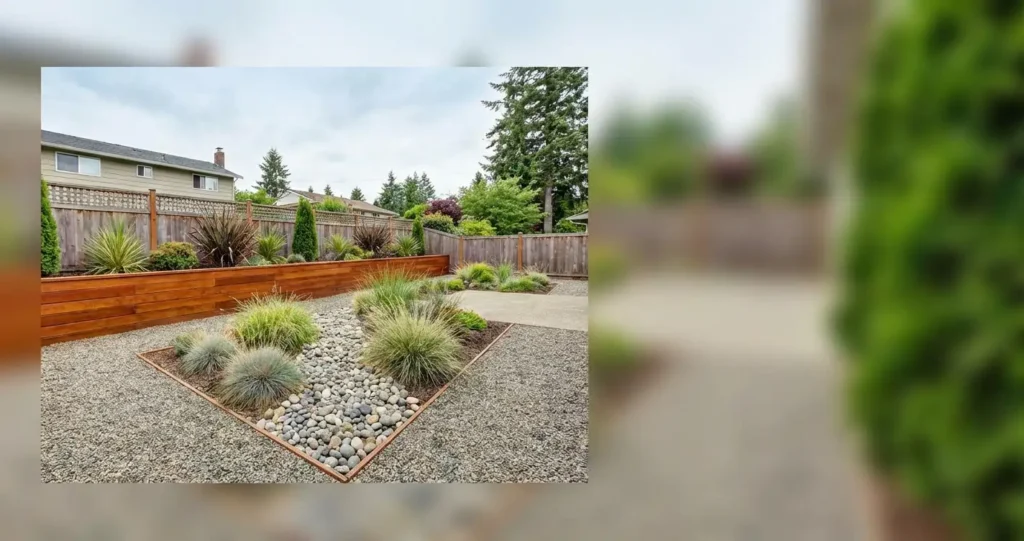
Stone features cost more upfront but need zero taking care of it for decades. A $600 rock garden with 3-5 boulders and drought-tolerant plants eliminates weekly watering and annual replanting forever. The labor savings alone justify the investment within three years.
Biggest Yard Mistakes to Avoid (and Cheaper Alternatives)
False economy costs more than smart spending. These five mistakes turn inexpensive yard improvements into expensive disasters.
4. Poor Drainage Equals Foundation Damage
Skipping pro drainage assessment saves $400-600 today. Foundation repairs from water damage cost $8,000-15,000 later. Langley’s heavy clay soil and wet winters make drainage very important.
Smart alternative: Hire a landscaping company for a drainage evaluation before any planting. They’ll identify problem areas and design ways. Basic drainage improvements cost $1,500-3,000 installed—far less than foundation repairs.
5. Wrong Soil Amendments for Langley Clay
Adding sand to clay creates concrete-like soil. Homeowners waste $200-400 on sand that makes problems worse. Plants die, requiring $300-600 in replacements.
Smart alternative: Amend clay with compost only. Mix 2-3 inches into the top 6-8 inches. Compost costs $25-35 per cubic yard versus $40-60 for sand, and actually improves drainage by creating soil structure.
6. Over-Planting: Spacing Mistakes Lead to Removal Costs
Planting shrubs at mature spacing looks bare initially. Many homeowners plant them closer for instant fullness. Three years later, overgrown shrubs need removal at $50-150 each.
Smart alternative: Follow mature spacing guidelines. Fill gaps temporarily with inexpensive plants that come back or flowers you buy each year. As shrubs grow, reduce temporary plants. You avoid removal costs and plants stay healthier with proper air circulation.
7. Skipping Permits for Retaining Walls or Major Grading
Unpermitted landscaping work can lead to:
• Municipal fines
• Mandatory removal and rebuild ($3,000-8,000)
• Problems selling your home (inspector flags unpermitted work)
Smart alternative: Check Township of Langley bylaws before major projects. Permits typically cost $200-400 but ensure work meets codes. For smaller walls, use stackable blocks that don’t require engineering.
8. Using Wrong Plants for Sun, Shade, or Moisture Conditions
Shade plants die in full sun. Sun-lovers rot in wet shade. Each dead plant costs $8-50 to replace, plus labor to remove and replant.
Smart alternative: Observe your yard for one full day before buying plants. Note which areas get morning sun, afternoon sun, or stay shaded. Match plants to actual conditions, not wishful thinking. Specialty nurseries provide free site-matching advice that prevents costly mistakes.
Where to Buy Cheap Yard Stuff in Langley
Knowing where to shop separates budget-conscious homeowners from those who overpay. Langley offers excellent local options for budget-friendly landscaping services and materials.
Local Nurseries versus Big-Box Stores
Big-box advantages: Lower prices on common items, convenient hours, volume discounts on bulk materials.
Local nursery advantages: Plants adapted to Fraser Valley conditions, expert growing advice, native and specialty varieties big-box stores don’t carry, often locally grown stock that transplants better.
Smart shopping strategy: Buy common items (mulch, basic tools, generic fertilizers) at big-box stores. Buy plants, especially natives and plants that come back, at local nurseries. The 15-25% high prevents the 100% loss of buying wrong plants that die.
Bulk Material Suppliers in Langley and Aldergrove
Landscape supply yards sell mulch, gravel, soil, and rock by the cubic yard or ton. Prices run 50-70% below bagged products.
• Art’s Nursery (Langley): Full-service nursery with bulk materials, delivery available
• Countryside Garden Center (Langley): Wide selection of bulk soil, mulch, and decorative rock
• Local aggregate suppliers (Aldergrove area): Lowest prices on gravel and crushed rock for large projects
Most offer pickup or delivery. Delivery costs $50-100 but saves time and vehicle wear. Split delivery with neighbors to reduce per-yard costs.
Community Plant Swaps, Municipal Compost, and Salvage Yards
Free and ultra-low-cost options exist if you’re willing to hunt:
• Langley gardening groups on Facebook: Members swap divisions of plants that come back, trade seeds, give away excess plants
• Metro Vancouver compost giveaway events: Free compost at select times, check Metro Vancouver website for schedule
• Salvage yards: Reclaimed bricks, stones, lumber for edging and hardscaping at fraction of new cost
Seasonal Sales Timing: When to Shop for Maximum Savings
Spring 2026 clearances (late May-early June): Nurseries discount early spring inventory to make room for summer stock. Save 20-40% on plants that come back and shrubs.
Fall 2026 sales (September-October): Deep discounts on plants that come back (30-50% off). They’ll still start growing before winter and come back strong in spring 2027. Container-grown shrubs also on sale.
Winter 2027 clearances (January-February): Best time to buy tools, hardscaping materials, and plan for spring. Landscaping companies also offer discounts on design consultations during slow season.
Create Your Beautiful Langley Yard in 2026 Without Breaking the Bank
Cheap yard work in 2026 is about making smart choices: low-cost materials that last, native plants that thrive without constant care, and smart pro help that stops expensive mistakes. The homeowners who succeed start small, build in phases, and focus on ways that save money year after year.
You don’t need a $20,000 budget to transform your Langley property. Focus first on good drainage and soil prep. Then add plants and features over time as you save money. By 2028-2029, you’ll have a yard that looks like a pro designed it—because it was planned that way from the start.
Transform your yard without breaking the bank. Splendid Landscaping Services creates beautiful, cheap outdoor spaces across Langley. Whether you manage a single-family home, townhome, or strata property, these budget-friendly strategies work for properties of all types. View our landscaping portfolio or request a custom landscaping plan today.
References
1 Natural Resources Canada. Canada’s Plant Hardiness Site. Available at: GcCanada’s Plant Hardiness Site | Natural Resources Canada