
We work the volume out with you before anything is ordered
BC Landscape and Nursery Association certification
Take the load and do it yourself, or we spread it
Clearbrook, Matsqui Prairie, Bradner and Sumas Prairie

| Abbotsford area | What we usually find | What it changes |
|---|---|---|
| Clearbrook and City Centre | Established suburban lots, mature planting, beds that have been topped up for years | Small volumes, easy access, and usually a top up rather than a full depth |
| Townline and West Abbotsford | Newer subdivisions with builder beds that were never really finished | More volume than owners expect, because the beds start shallow |
| Clayburn and the eastern slopes | Older village lots and properties working a grade | Coarser material, so it stays where it is put on a pitch |
| Matsqui Prairie | Flat farmland and diked lowland, long driveways, plenty of room | Easy to tip on in summer, and worth thinking about after a wet week |
| Sumas Prairie | Just over 100 square kilometres of mostly agricultural land, large parcels | A volume job. Splitting the load near the beds saves more than the extra drop costs |
| Bradner and Mount Lehman | Acreages and working farmland in the rural north west | Long barrow runs unless the truck can get close, so access drives the price |
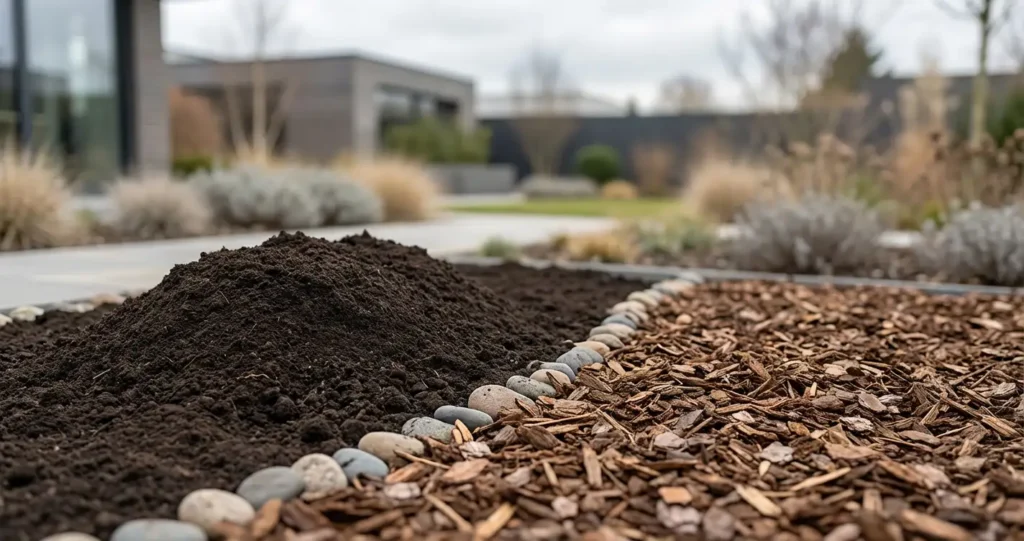
Multiply the bed length by the width in feet, multiply by the depth in feet, and divide by 27. The calculator above does it for you. As a rough feel, a bed twenty feet by four at three inches deep is about three quarters of a cubic yard.
Usually, and it is worth agreeing where before the day. A loaded truck needs firm ground and room to turn, and on prairie properties the best spot in August is not always the best spot in March. Send a photo of the driveway and we can tell you.
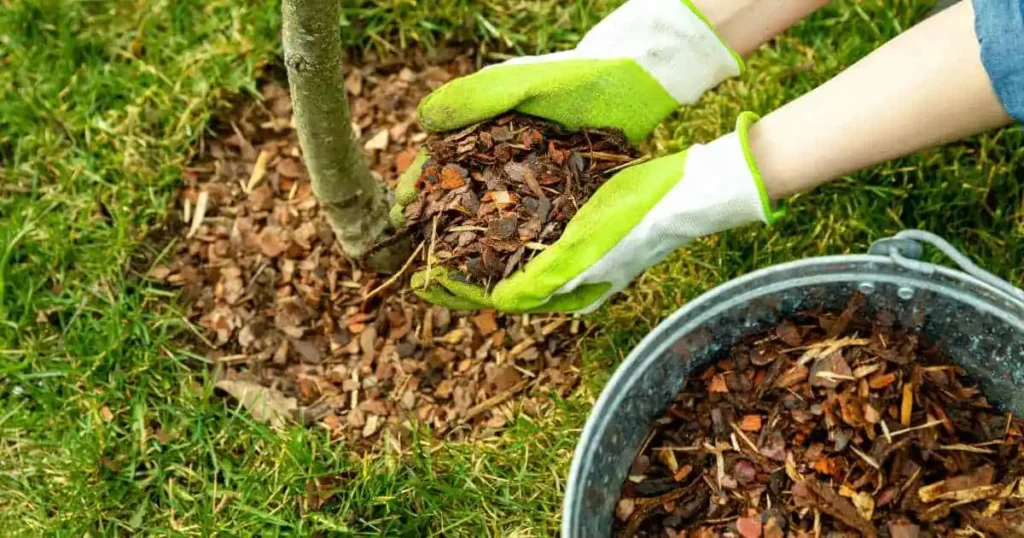
Often, yes, if you have the time and a barrow. The material costs what it costs; the labour is the variable. Plenty of Abbotsford owners take a load and do a weekend of it, and we are happy to quote either way.
Three inches is the usual working figure on an established bed, less over shallow roots, and a new bed takes more because it starts from nothing. Depth is the single biggest driver of how many yards you need, which is why guessing it is expensive.
That is the main reason to do it here. Well back from the water, the beds dry out harder and faster than they do nearer the coast, and a proper depth of coarse material over damp soil is the cheapest way to keep water where the roots are.
A coarser one. Fine material moves downhill in heavy rain and crusts over in the sun, so on any bed with a pitch it is worth going up a grade even though it looks less tidy on day one.
Most established Abbotsford beds come round on a one to two year cycle, sooner where the bed is exposed and the material is fine. You are topping up a layer that is steadily becoming soil, not replacing a surface, so the second visit is always a smaller order than the first.
It comes down to yardage, the grade, and the access. The volume we can work out from measurements before anyone visits; the access we want to see. We measure, quote in writing, and the number holds.