
15 Years in the Lower Mainland • Licensed and Insured • Every Clipping Hauled Away
Hedge Trimming in Tsawwassen, BC
Cedar, laurel and boxwood cut to a clean line on a peninsula where salt wind and dry summers make hedges harder to keep. We work across Tsawwassen from Beach Grove to English Bluff.
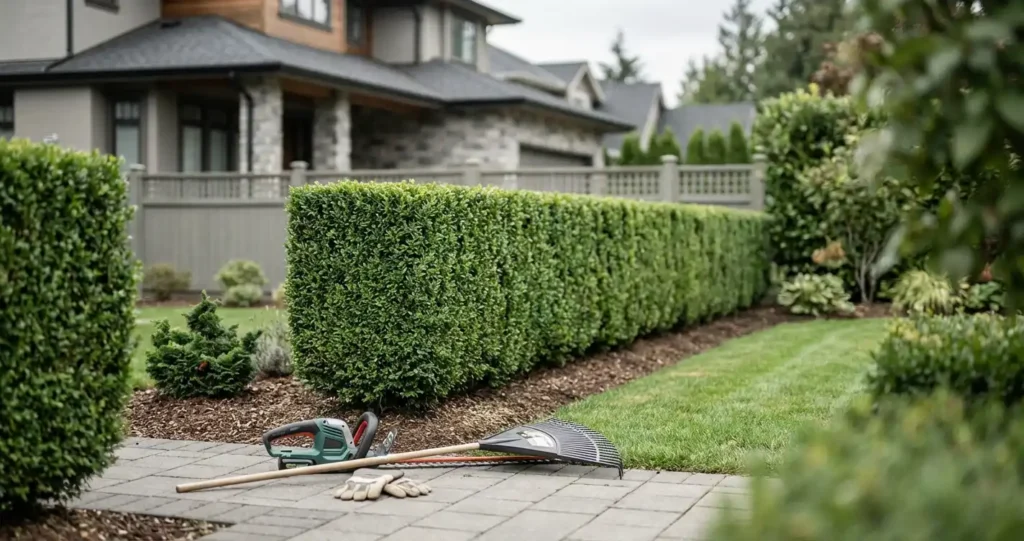
A Peninsula Is Hard on a Hedge
Tsawwassen sits between Boundary Bay and the Strait of Georgia, with water on two sides and very little between the gardens and the open water. That gives hedges here a set of problems the rest of the Lower Mainland does not share.
- Salt burn on one face only. Wind carries salt off the water and scorches the seaward side while the sheltered side stays green. It looks like disease and gets treated as disease. It is exposure, and cutting the burnt face back hard is the worst thing you can do to it.
- Summer here is genuinely dry. This corner sits in a rain shadow and is one of the driest parts of Metro Vancouver. A hedge under drought stress should not be sheared in the heat, because it cannot push the new growth needed to cover the cuts.
- Free draining soil makes that worse. Lighter soil across much of the area sheds water quickly, so hedges dry out sooner than the same planting would inland.
- Many hedges here are working windbreaks. They shelter everything behind them. Taking one down hard for a tidy line removes that shelter for a full season, and the garden behind it pays for it.
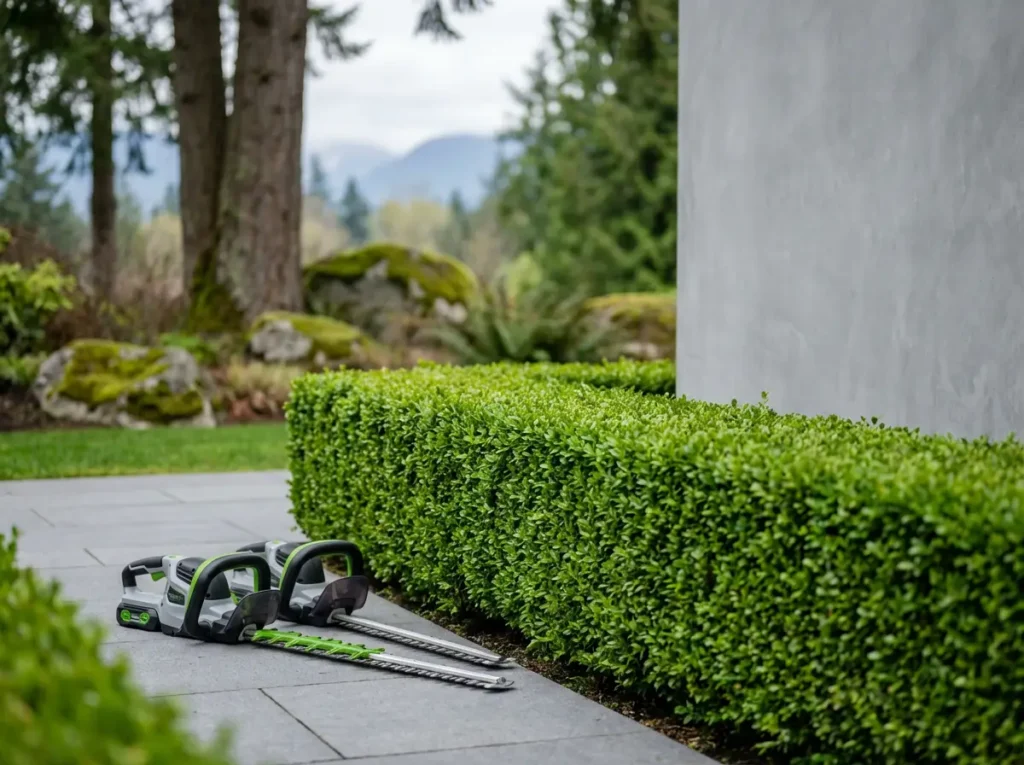
What We Do About Salt and Wind Damage
A wind burnt hedge is not usually dying. It is usually a hedge that has lost its outer growth on one side and needs that side given a chance to recover rather than cut again.
- We look at the sheltered face first. If the back of the hedge is healthy the plant is fine, and the problem is exposure rather than root or disease trouble.
- The exposed face gets shaped, not sheared. Cutting into the brown on that side removes what little cover is left. We take the green tips only and let it thicken outward.
- We cut the sheltered side to match, not the burnt side. The line comes from the healthy face, which keeps the hedge looking even without stripping the side that is struggling.
- Timing shifts for exposed hedges. We work them outside the hottest, driest weeks so new growth has a chance to harden before the next run of wind.
Where a hedge has thinned badly on the seaward side we will say so plainly, including when the honest answer is that it needs a season to recover before it is worth cutting to a line again.
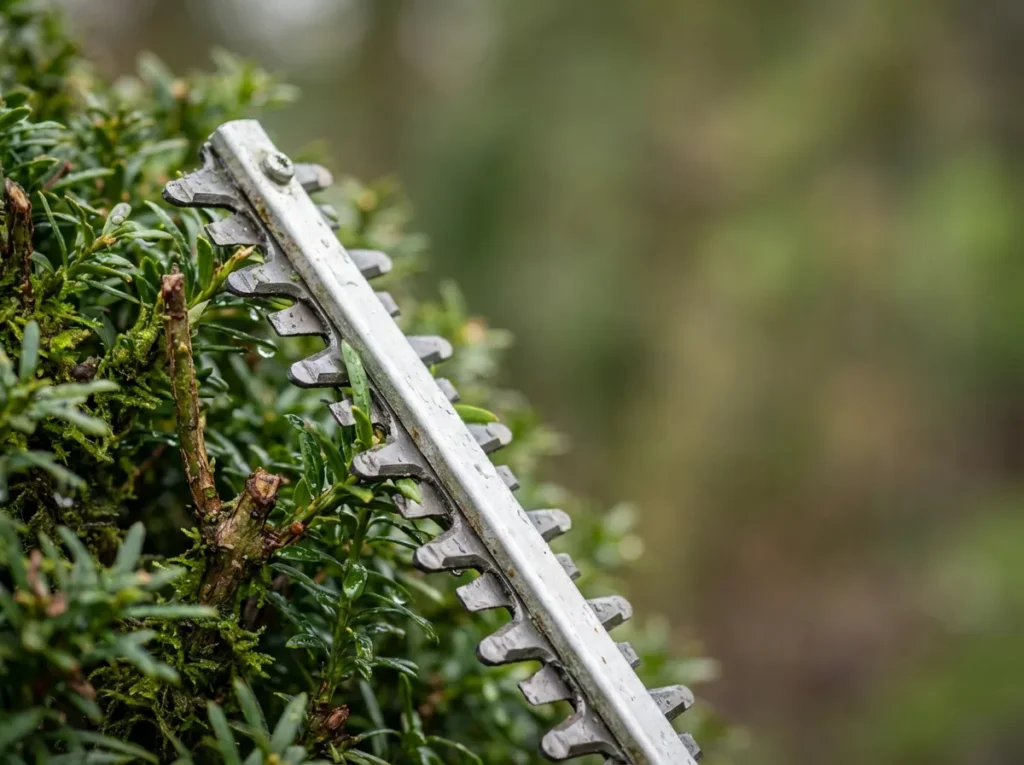
How We Work
The same order every visit, whether it is a short front boundary or a full windbreak along the back of a property.
- Assess exposure before anything else. Which face takes the wind, how much green is left on it, and whether the hedge is doing a sheltering job that the cut needs to respect.
- Check for nesting birds. Active nests are protected. From roughly April to August we check first and leave any occupied section until the birds are done.
- Sheets down before the first cut. Clippings land on canvas, not in the beds or across the drive.
- Sides first, working bottom to top. Kept slightly wider at the base so light reaches the lower growth, which is what stops a hedge going bare underneath.
- Top cut to a line. Level, or to whatever shape suits, against a string line where it matters.
- Hand finish, then clear out completely. Missed shoots cut by hand, dead wood pulled from the middle, then everything raked, blown and taken away.
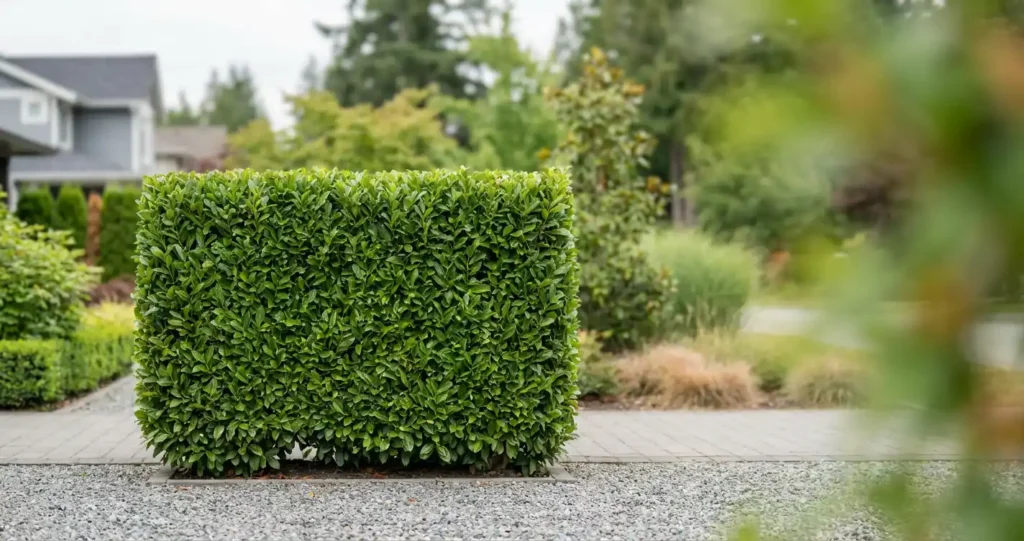
When to Cut, and When Not To
Two cuts a year suits most hedges here. What changes in Tsawwassen is less the number of visits than the weeks we avoid.
Late spring, once the new growth firms up
The main cut. Soft spring growth has hardened, the plant still has the season ahead of it to cover the cuts, and the worst of the summer dryness has not arrived.
Early autumn, before the weather turns
The tidy up that carries the hedge through winter. We finish before the cold and the winter winds arrive, because a late cut pushes soft growth at exactly the wrong moment on an exposed site.
The Weeks We Avoid
Shearing a hedge in a hot dry spell asks it to produce new growth at the moment it has least water to do it with. On a peninsula that dries out faster than the areas inland, that is a real risk rather than a technicality.
If you call us in the middle of a dry August we will usually suggest waiting a few weeks, and say why. A hedge cut at the wrong time can look worse for a year.
Our guide covers how often hedges need cutting and what it costs.
What the Price Includes
We quote per property after seeing it, because length, height, species and access differ at every address. Whatever the number, it covers all of this.
- Every reachable face cut and shaped, the neighbour side included wherever we can lawfully get to it
- The inside of the hedge opened up, with dead and crossing wood taken out
- Clippings bagged at the hedge and driven away the same day
- Hard surfaces and beds left clean, not just the lawn
- A straight answer on what we found, including when the right advice is to leave a wind damaged face alone this season
Beds usually want doing at the same time. Fresh mulch installation in Tsawwassen after a cut keeps the moisture in, which matters more here than in most of the Lower Mainland.
Where We Work in Tsawwassen
- Beach Grove and Boundary Bay, the most exposed gardens
- English Bluff and Cliff Drive, mature hedges on the slope
- Pebble Hill and Tsawwassen Springs
- Across the wider community, plus hedge trimming across Delta
Why Tsawwassen Owners Call Us Back
We read the site, not just the hedge
Which face takes the wind changes how a hedge should be cut. Shearing every side the same way is what leaves a brown seaward face and a bare base.
Nothing left behind
Clippings collected and hauled away every visit. No bags at the kerb, nothing pushed into the back of the border.
Licensed, insured and BCLNA certified
Fifteen years across the Lower Mainland, on private gardens, strata grounds and commercial frontages.
Hedge Trimming Across the Lower Mainland
Part of our wider hedge trimming service. Pick a community for local detail.
Hedge Trimming Questions
That is almost always salt and wind rather than disease. The face pointing at the water takes the exposure and loses its outer growth, while the sheltered side stays green. The fix is to stop cutting into the burnt side and let it thicken outward again.
Usually, as long as there is still green growth on that face to build from. What it needs is time and a lighter touch, not a hard cut. Where a face has gone fully bare on cedar it will not regrow from the brown wood, and we will tell you that rather than take your money for a cut that cannot help.
Twice a year suits most, in late spring and early autumn. A slow growing boxwood can manage on one cut. What matters more here is avoiding the hot dry weeks in between.
In a dry spell a hedge has the least water available exactly when we would be asking it to push new growth to cover the cuts. This corner of Metro Vancouver is drier than most, so we would rather wait a few weeks and give you a better result.
Yes, and it is worth saying so when you book. We keep the density that makes it work as shelter and take the line off the growth above and outside that, rather than reducing the whole thing and leaving the garden behind it exposed.
Yes, on every visit. Sheets go down before the first cut, everything is collected, and paths and drives are blown clean before we leave.
Not through an occupied nest, no. Dense coastal hedges are popular nesting sites and active nests are protected, so from roughly April to August we walk the run before starting. An occupied section gets left and finished on a later visit.
We price the hedge in front of us rather than publish a rate. On this side of Delta the things that move the number most are how exposed the run is, how far the truck can get from it, and whether a wind damaged face needs staged work instead of one straight cut. Cleanup and haulage are in the figure we give you.
Related services
Book Hedge Trimming in Tsawwassen
Send us the address and which side of the hedge faces the water. That tells us most of what we need before we even arrive. You get a fixed written price, and it already has the cleanup and the haulage in it.
Call 604-260-0348, or use the form and we will come and look.